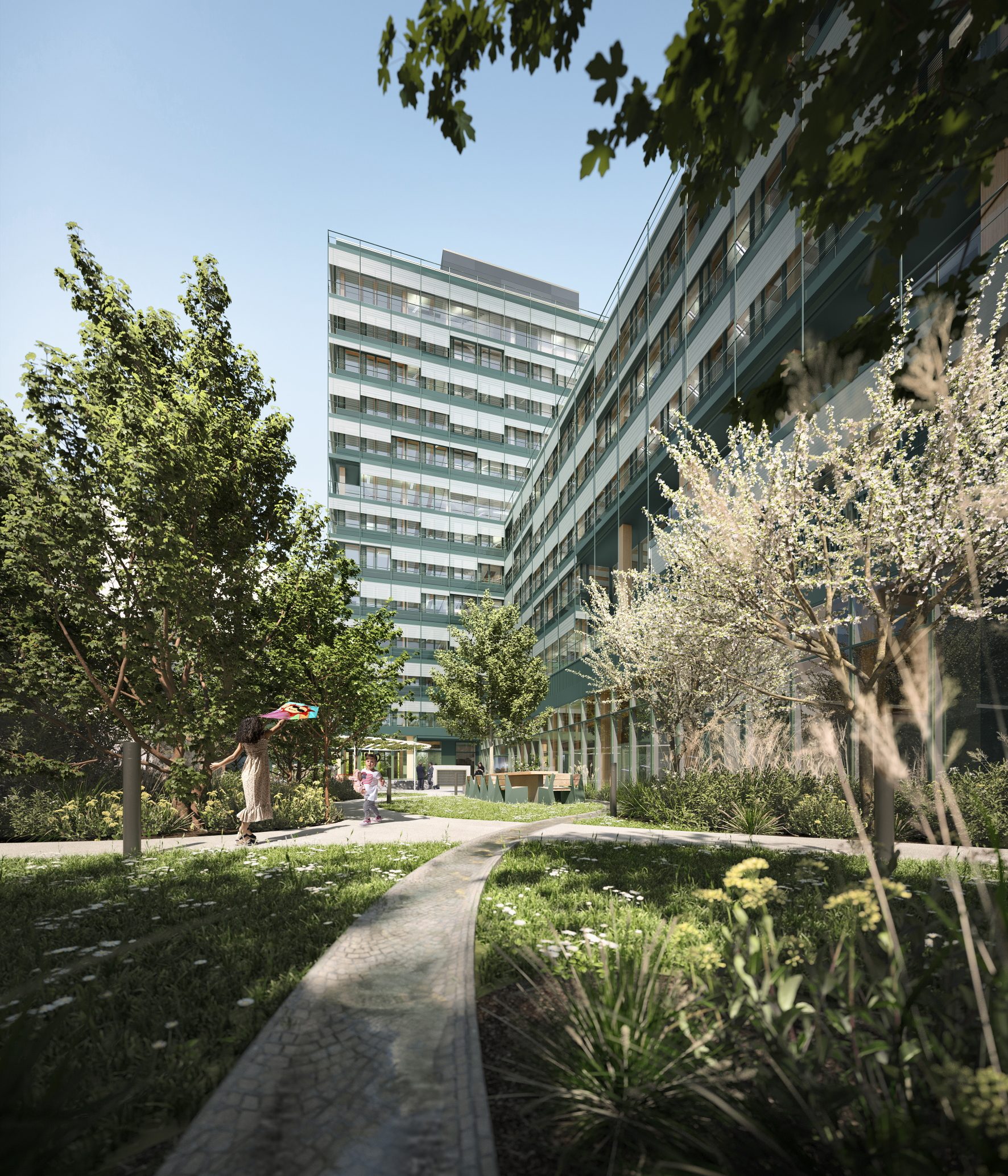
UmweltBank AG is a financial institution based in Nuremberg specialising in sustainable property. For them and the Hamburg-based architectural firm Spengler Wiescholek, the UmweltHaus is a true milestone for a number of reasons. On the one hand, this was the first time the bank acted as a property developer themselves. On the other, there is no building of this height with a supporting structure made primarily of BauBuche and spruce. In addition, the high-rise features a full-surface photovoltaic façade that provides active weather protection.
Previously spread across several locations in the city, UmweltBank wanted to bring its staff together under one roof and, in doing so, make a statement about sustainable construction. Accordingly, the design is entirely focused on durability and recyclability – an approach that the German Sustainable Building Council (DGNB) recognised already as outstanding during the design phase, awarding the project a Platinum pre-certification, its highest accolade. The final design of the UmweltHaus is based on a structural framework made of BauBuche and spruce where each material is deployed where it is most suitable with regard to structural strength.
The design emerged from an open competition involving around 20 participants. Spengler Wiescholek won with a concept that seamlessly integrates a timber structure, a power-generating façade and external sun protection. On the ground floor, a supermarket, a café and a event foyer provide public facilities that embed the building in the local community. However, the UmweltHaus is only the first project in the development of a „UmweltQuartier” or sustainable neighbourhood on the former GfK site in Nuremberg.
Hybrid timber construction – structural framework made of BauBuche and spruce for a 52 m tower and a 30 m high long block
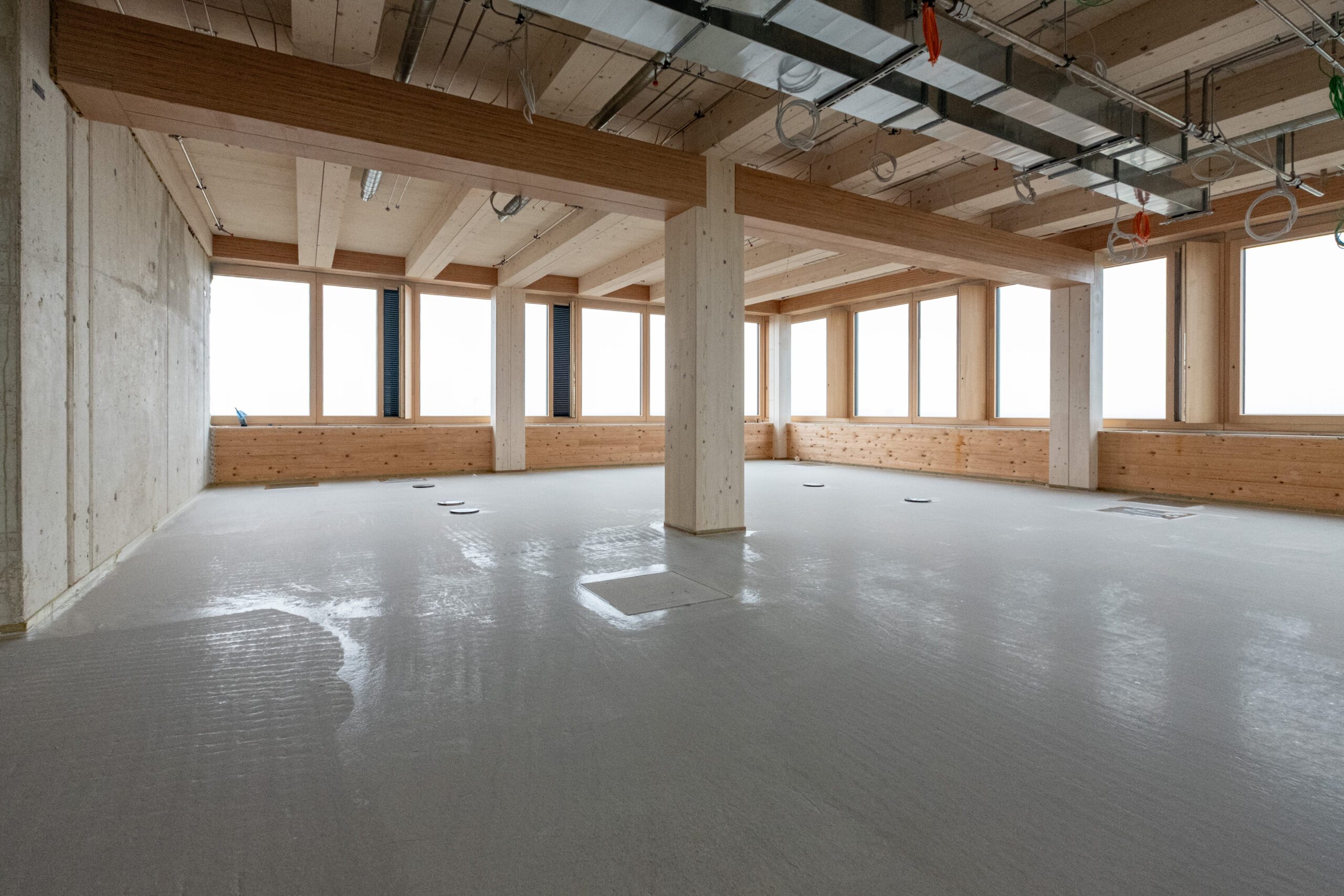
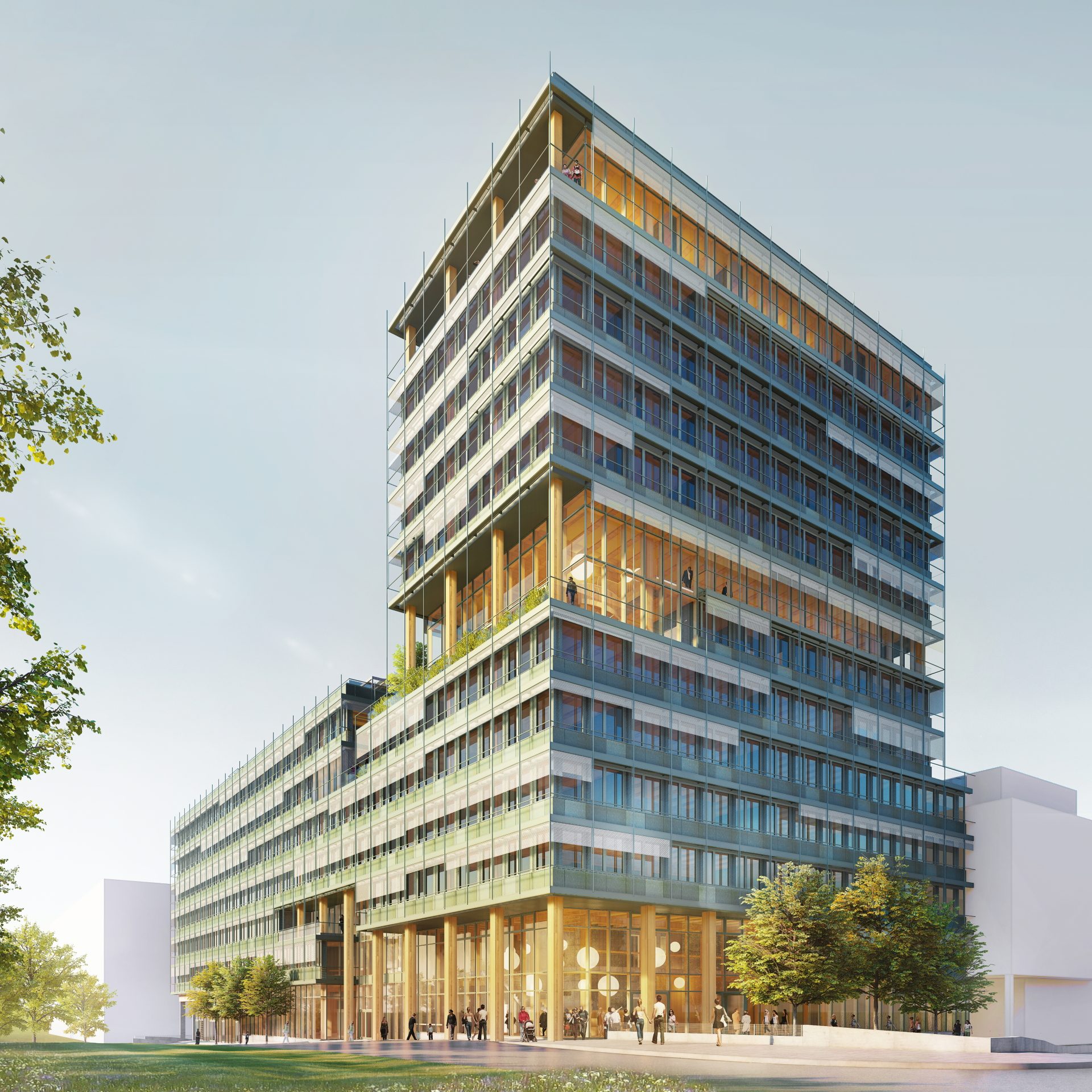
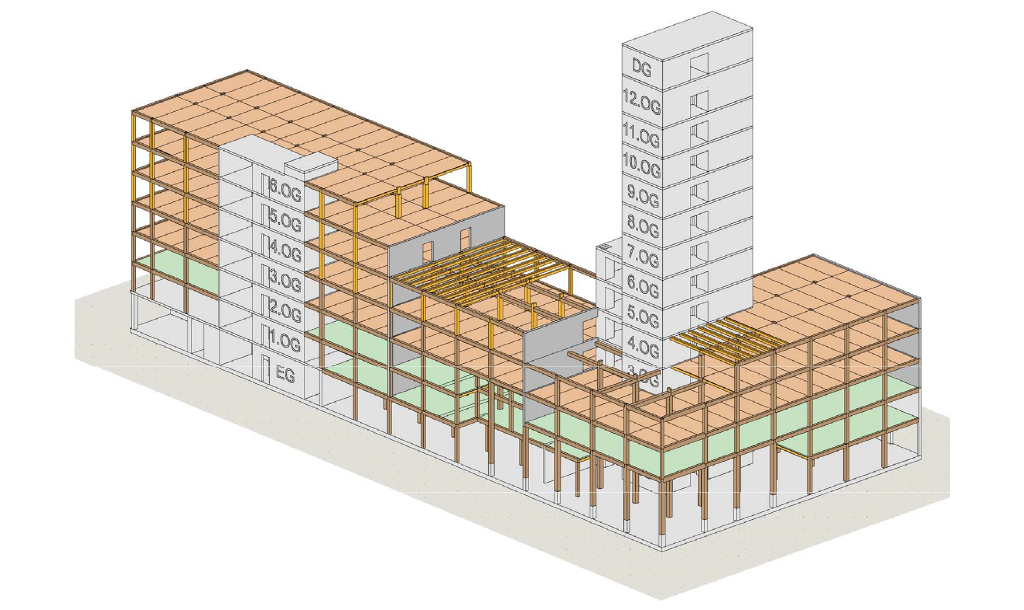
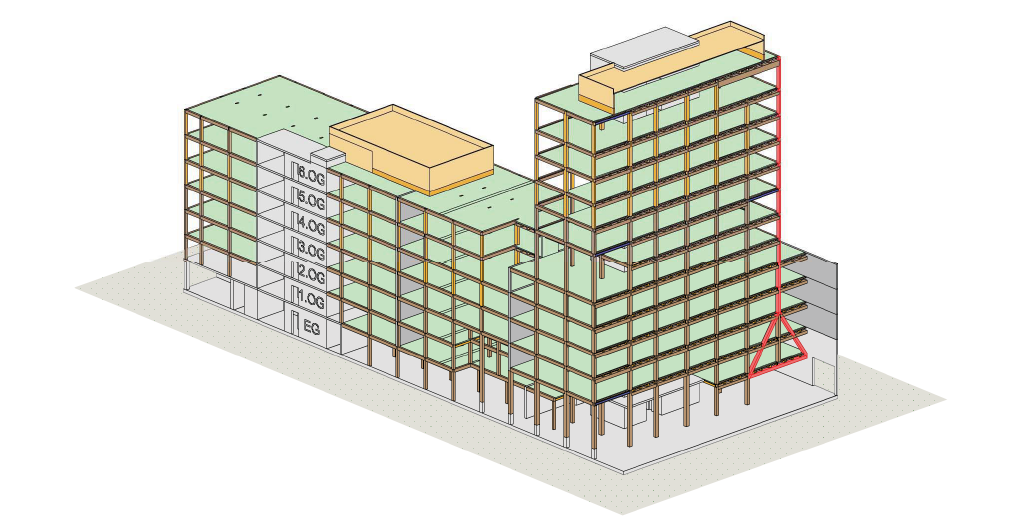
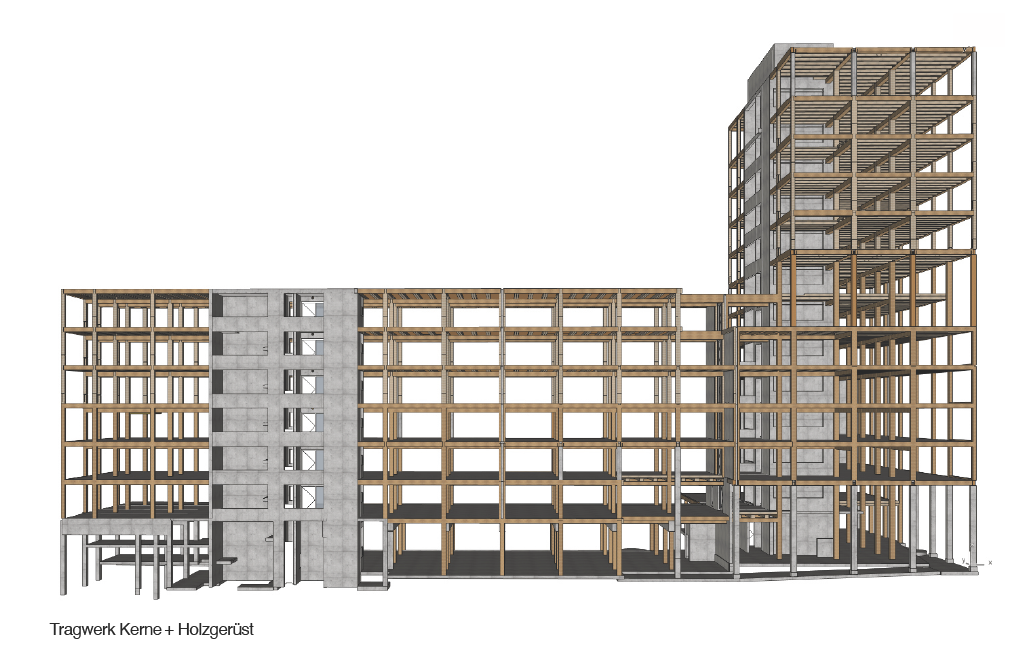
The new development on Nordwestring comprises a slender, 52 m high tower with 13 full storeys and a lower, approximately 30 m high long block with seven full storeys. The tower is 39 m long and approximately 17 m wide. Attached to it, we find a 17 m wide and 69 m long block. Together, the two sections span a length of around 86 m. The structural design is based on a hybrid system combining timber and reinforced concrete. The posts, beams, joists, and façade elements are made of timber, while the floors are constructed from timber-concrete composite (TCC) slabs.
©merz kley partner AG
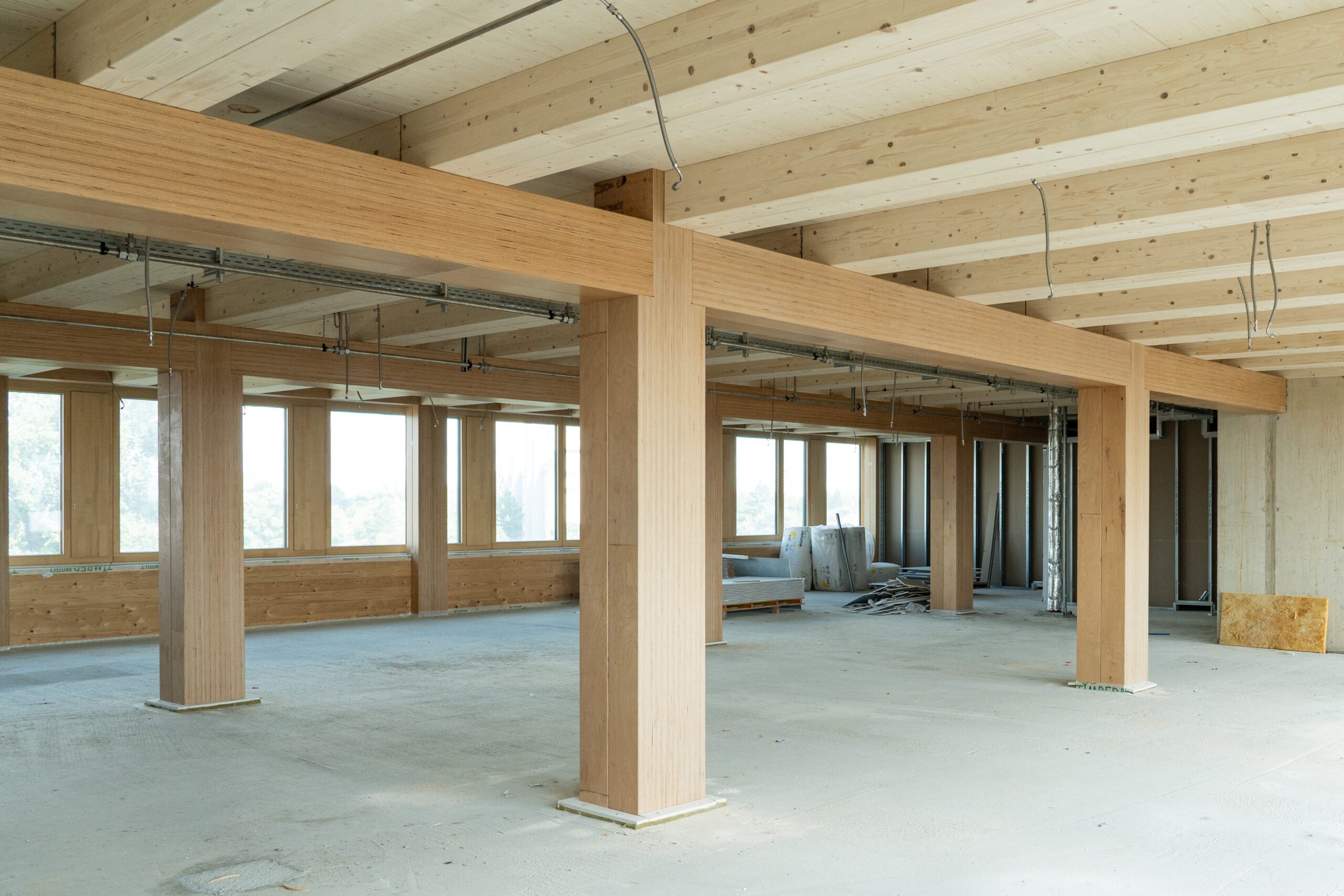
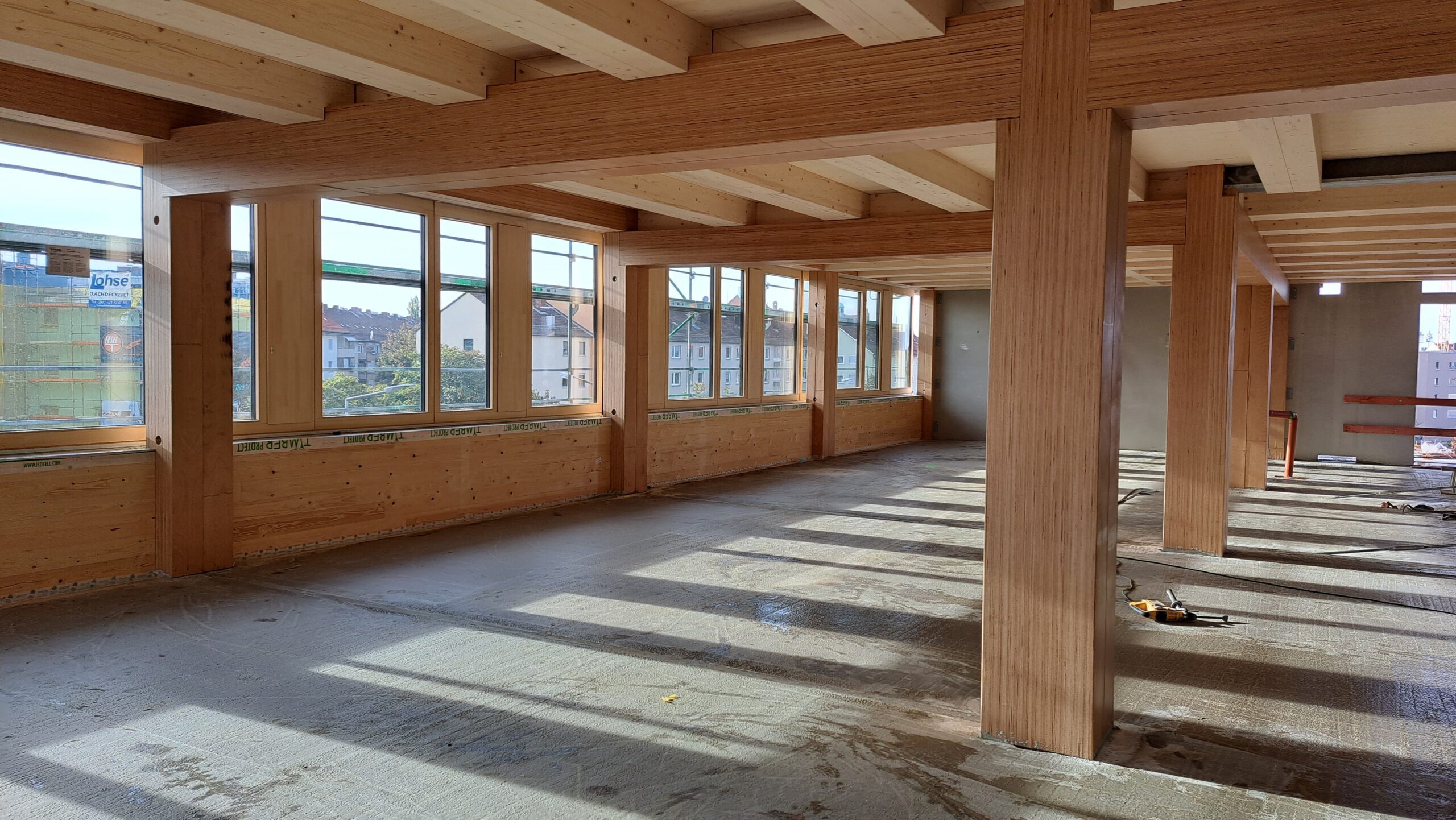
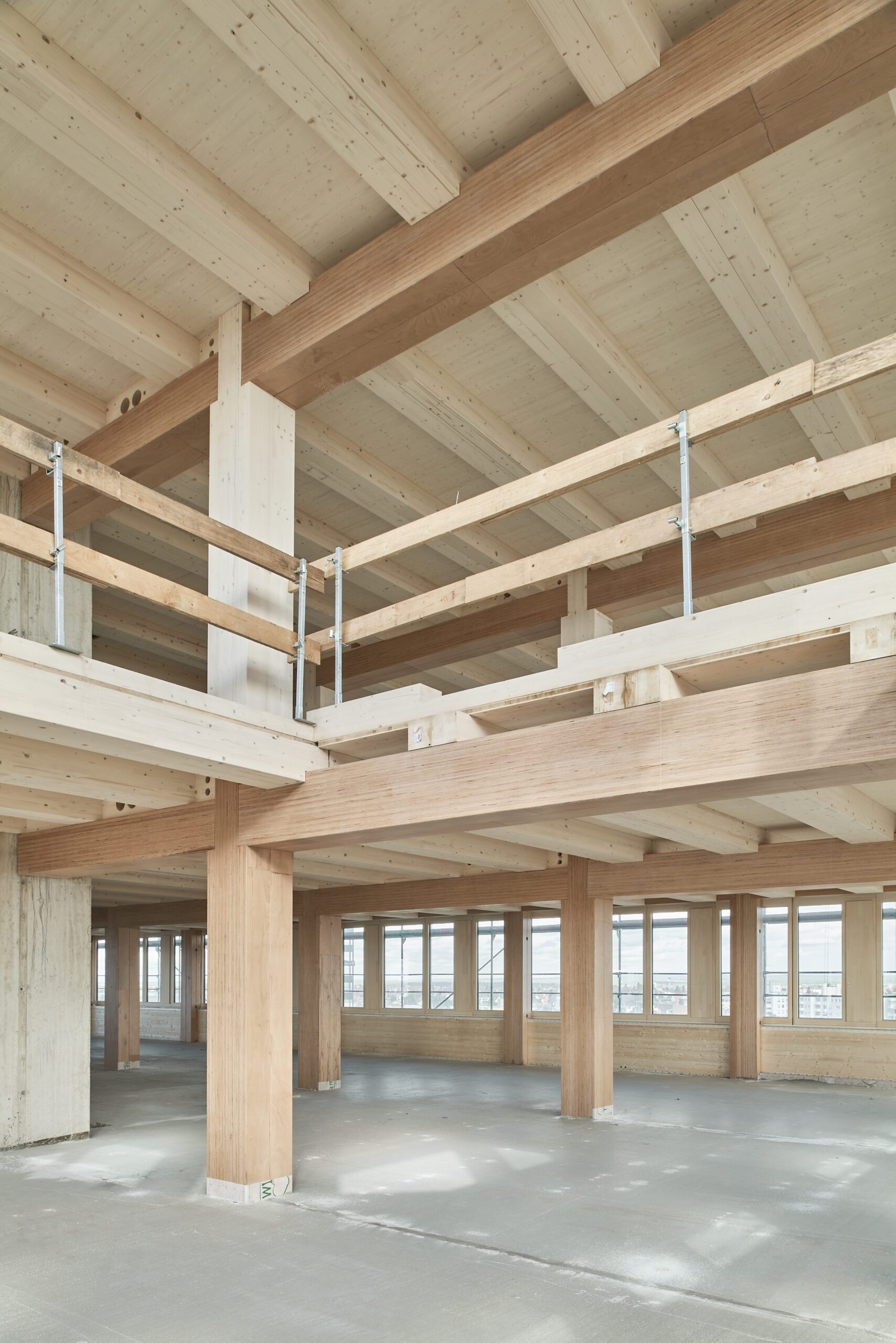
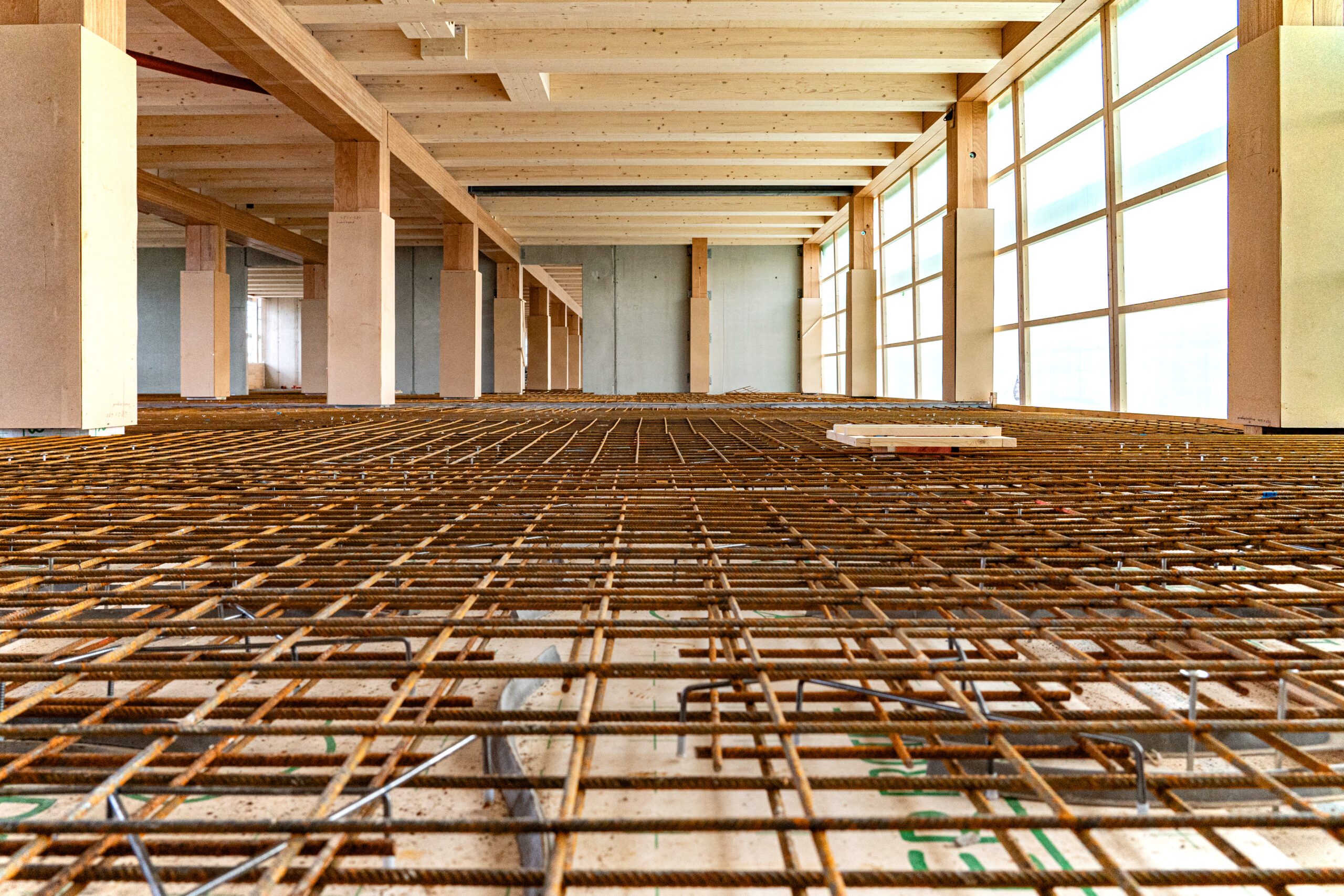
The tower and the long block are designed as a continuous timber-frame structure from the ground floor to the roof, based on a support grid of 5.50 m. Only the basement levels, the two service cores and a number of fire walls and posts at ground-floor level are made in concrete, as this was required for fire safety. The TCC floor slabs consist of arched glulam ribs with three-layer panels screwed onto them. Milled grooves provide the shear connections with the in-situ concrete layer, which is just 12 cm thick and thus significantly thinner than would be the case with standard reinforced concrete slabs. Thanks to the arched rib elements, there was no need for a temporary support structure for the floors during construction. This method of construction course inspired by traditional carpentry – beam on beam, with floor on top. All connections are screwed so that the materials can be easily separated by type at the end of their life cycle.
©merz kley partner AG
BauBuche – high-performance timber product for the heavy loads
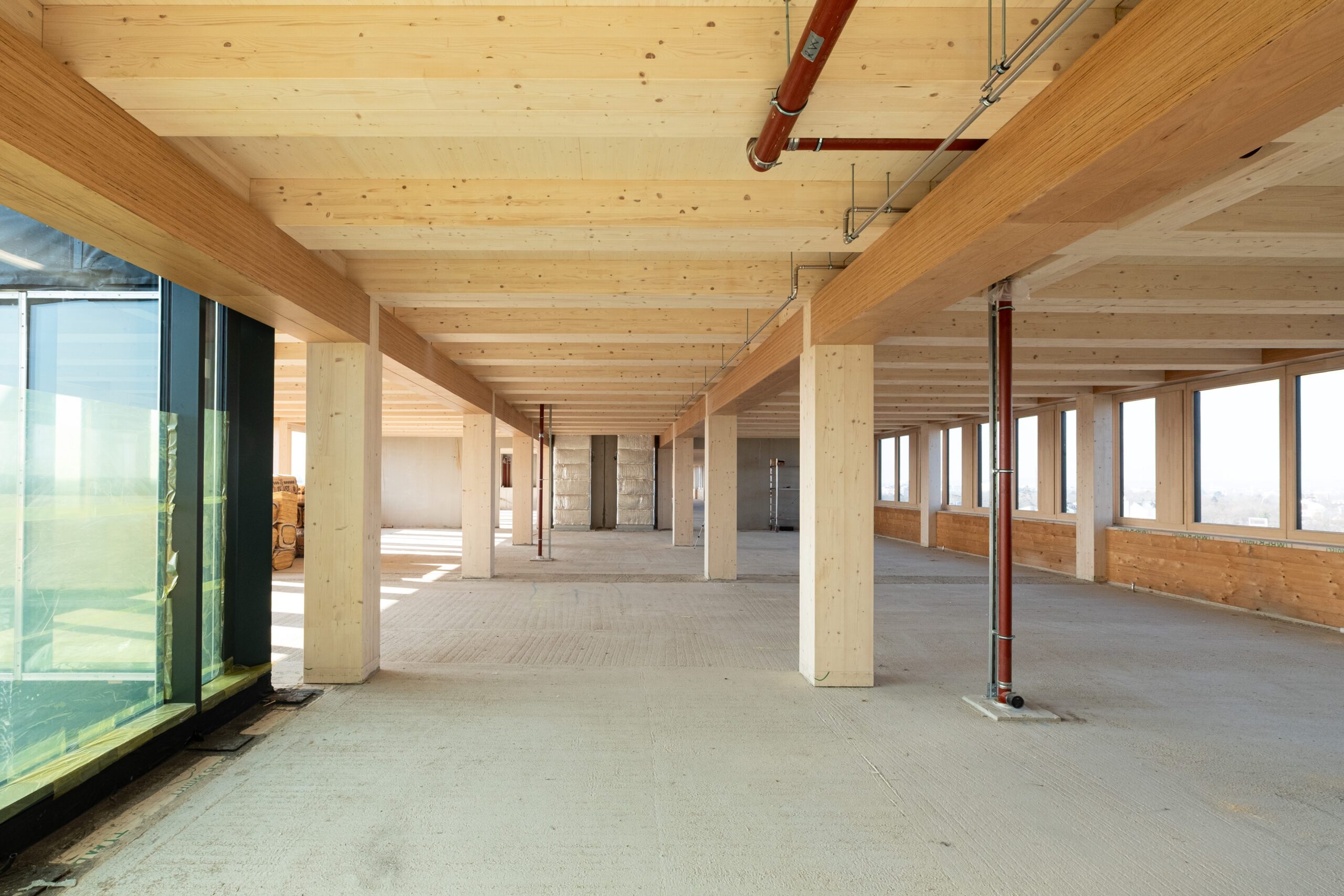
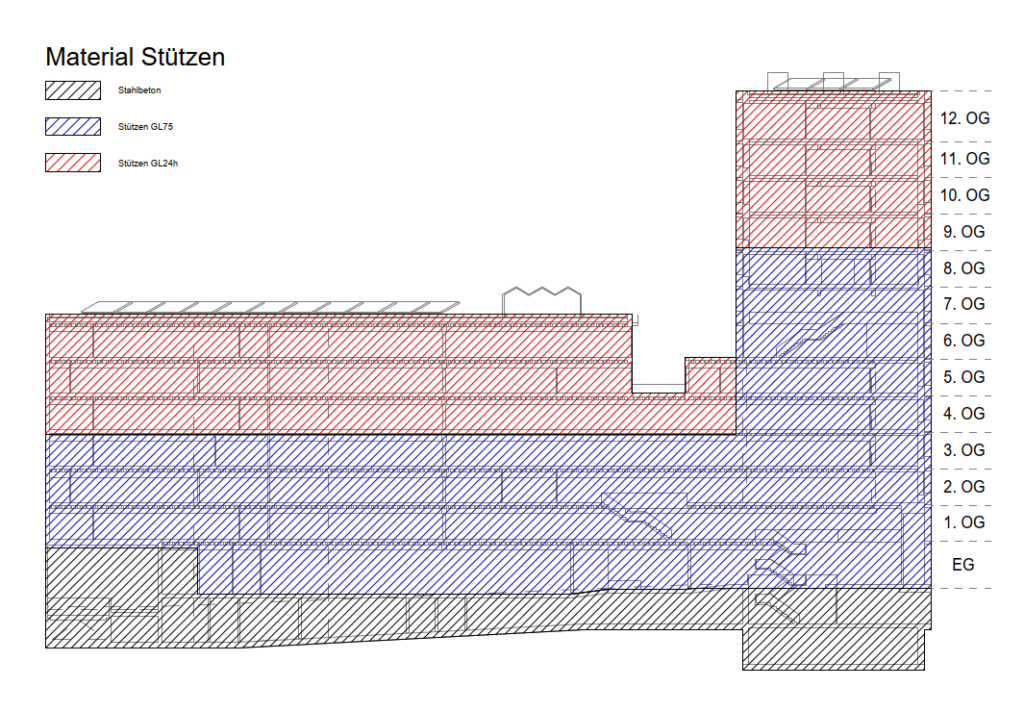
The key to constructing the 52 m high tower with a slender timber structure lies in the exceptional performance of BauBuche. This high-strength hardwood product can bear almost twice the load of spruce across the same cross-sectional area, and up to three times the load under purely axial compressive stress. BauBuche therefore offers a superior load-bearing capacity, well beyond the capacity of spruce. As a consequence, BauBuche accounts for 760 m3 of the total timber material of 3000 m3 used in this project. The choice of the timber material and its application depended on the loads to be borne on each floor. Consequently, BauBuche is used on the lower and middle storeys that are subject to high loads, while the structural framework above these levels where loads are lower is made in spruce. In the long block, this change of material occurs between the 3rd and 4th floor. In the tower, it happens between the 8th and the 9th floor. The slim post cross-sections free up valuable floor space.
A comparison of these cross-sections shows just how significant the difference is.
©merz kley partner AG
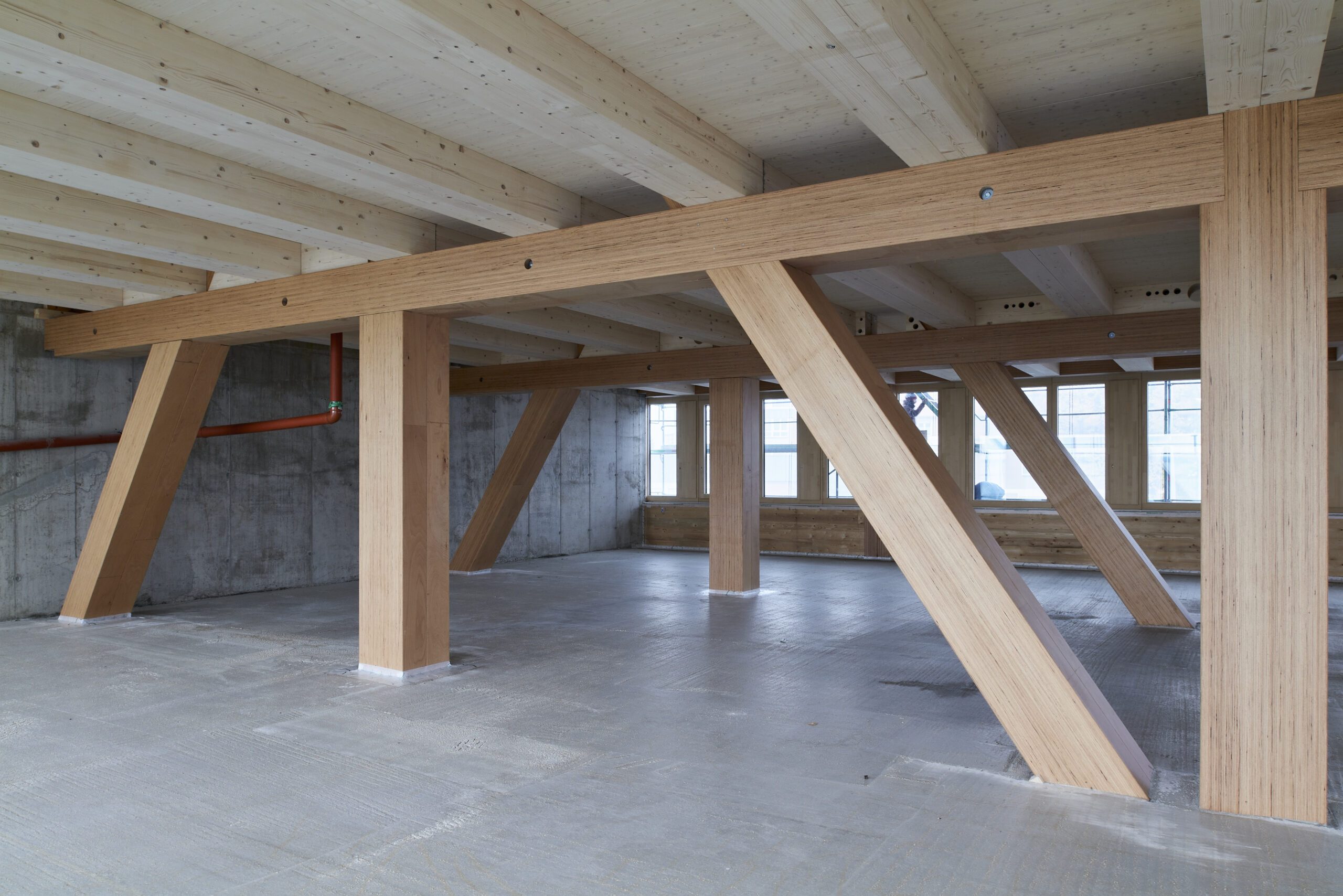
In the tower, the BauBuche interior posts that are approximately 8 m high in the foyer and 4 m high in the main structure measure 48 x 48 cm (the façade posts differ in the cross-section from those in the interior). An equivalent post in spruce glulam would need to have dimensions of approximately 64 x 64 cm. In the adjacent long block, the BauBuche internal posts have a cross-section of 48 x 40 cm and a height of 4 m. Equivalent posts in spruce glulam would measure about 56 x 56 cm. From an architectural point of view, the general principle was that the cross-sections of the posts should not vary from floor to floor. To achieve this, the post cross-section required to support the heaviest loads was taken as the standard dimension for the supports on all floors, even though they became essentially oversized towards the top.
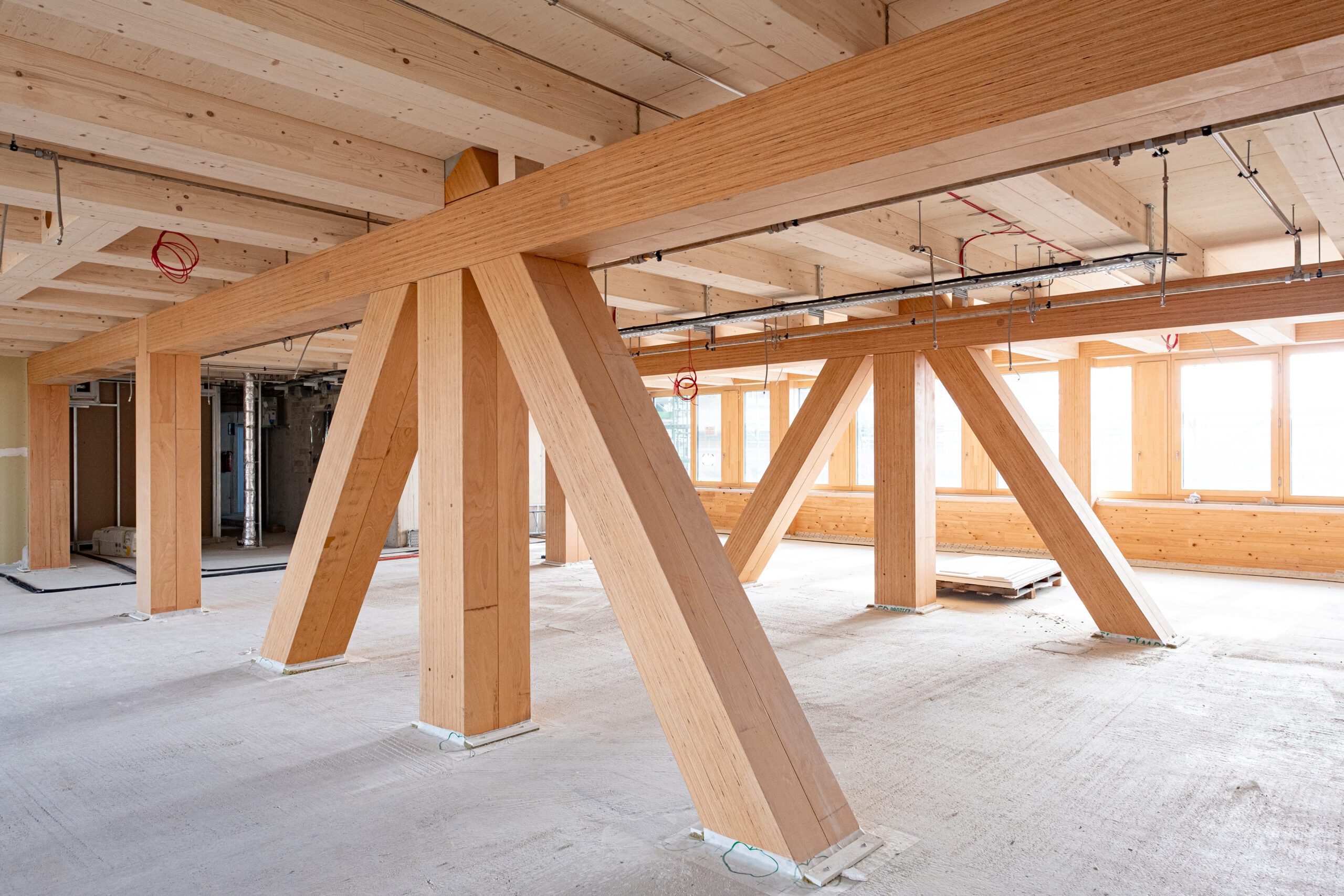
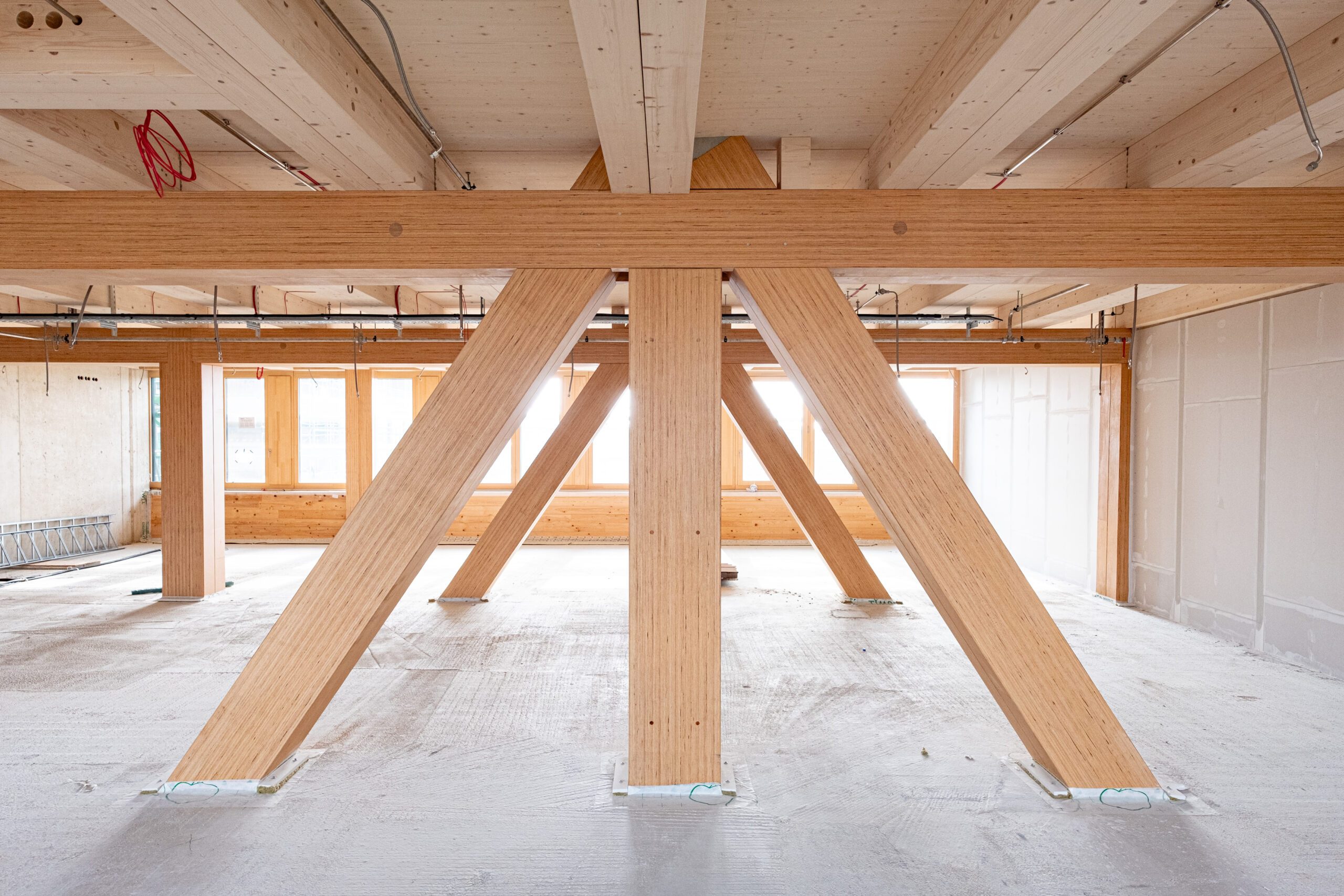
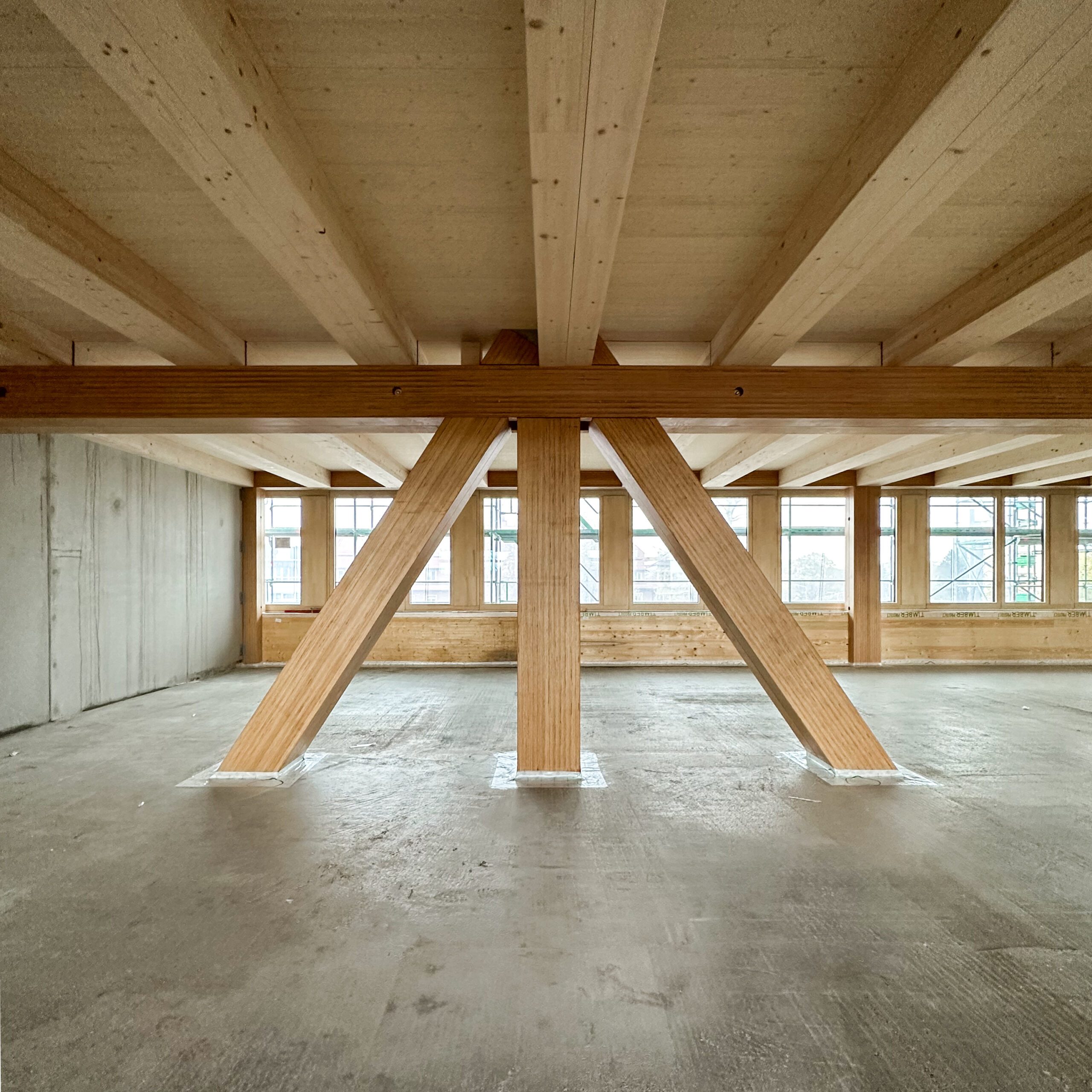
The two truss structures above the ground floor demonstrate particularly well what BauBuche is capable of, as a design familiar from traditional roof truss construction was adopted where loads are transferred outwards to the sides in order to create an open space below the trusses. With BauBuche, it was possible achieve a spacious, open-plan foyer completely free of posts. Due to their complexity, the trusses were first assembled on a trial basis at the factory before being installed on site. Force-fit geometries of this kind in a building of the height of the UmweltHaus tower are only possible with a high-strength material such as BauBuche.
©Spengler Wiescholek Architektur Stadtplanung PartGmbB
Prefabrication – the key to speedy construction
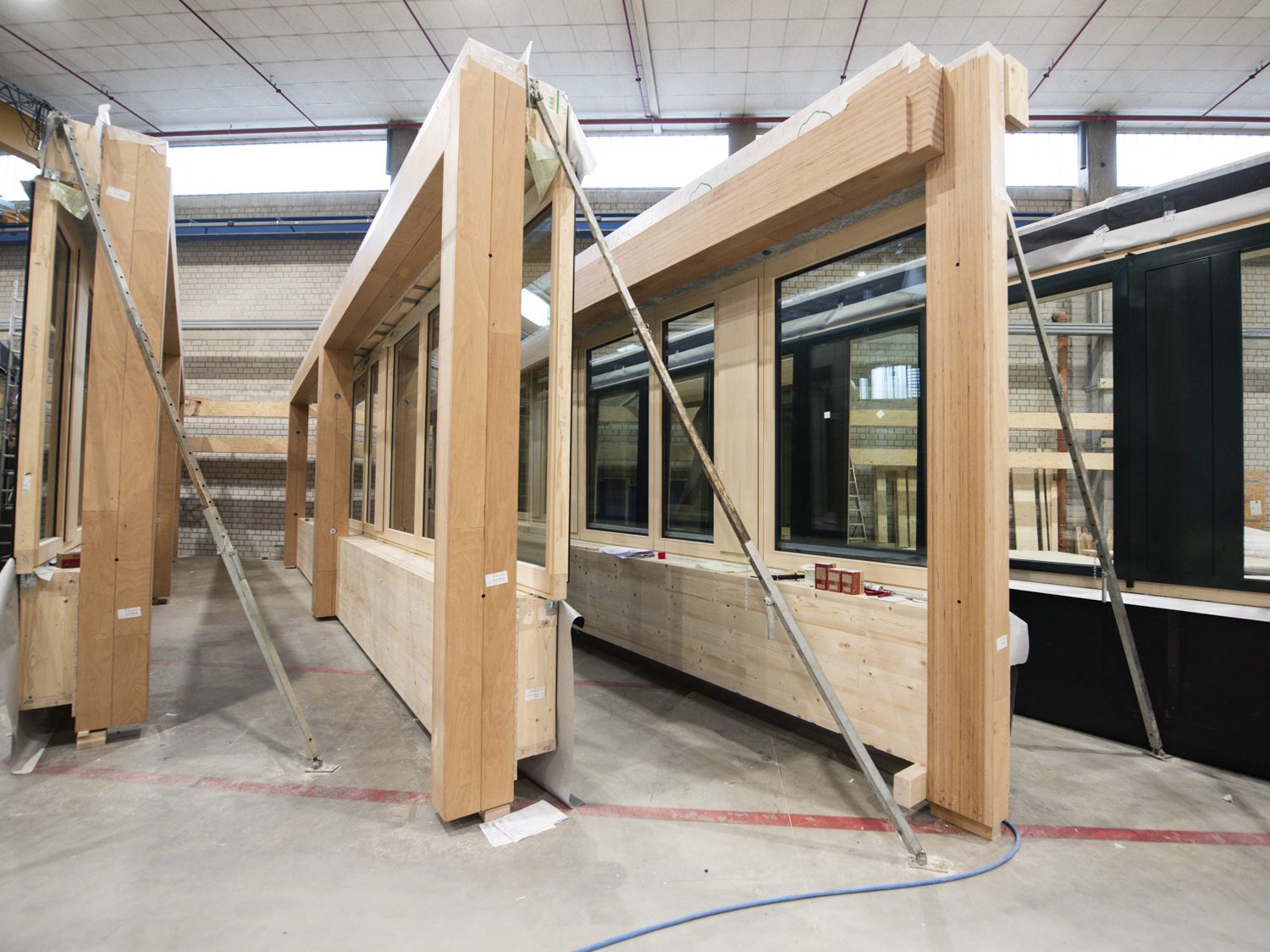
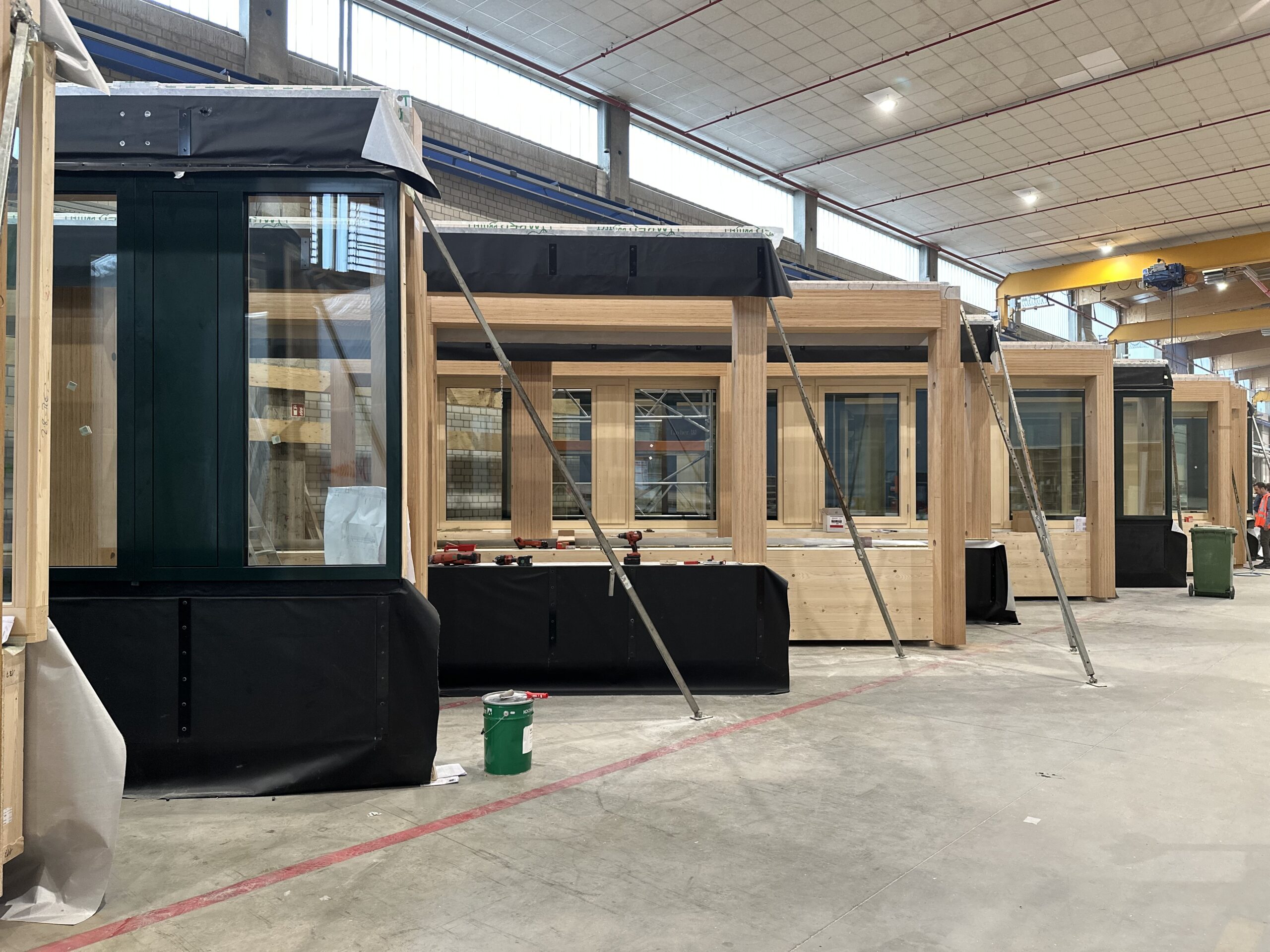
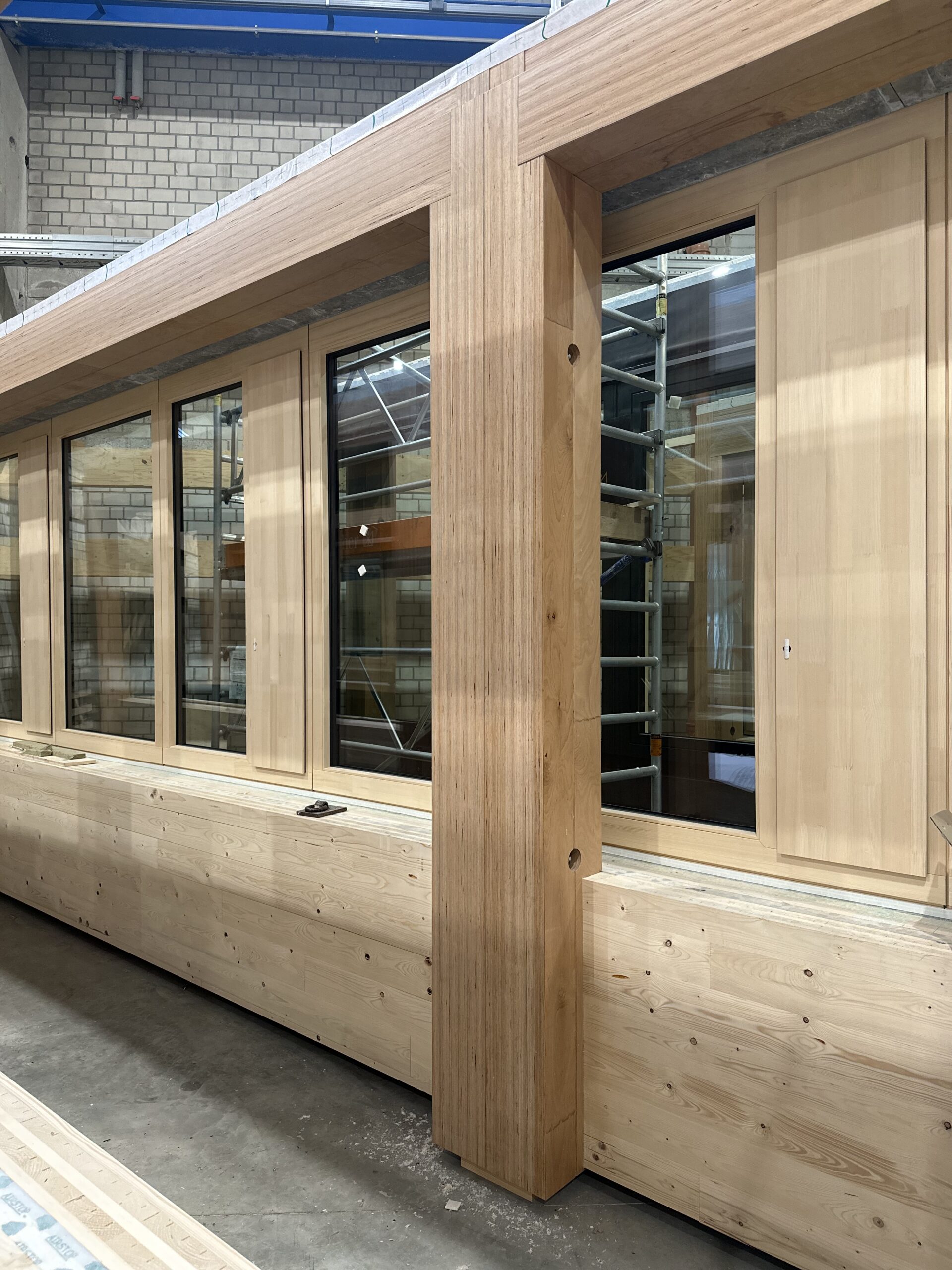
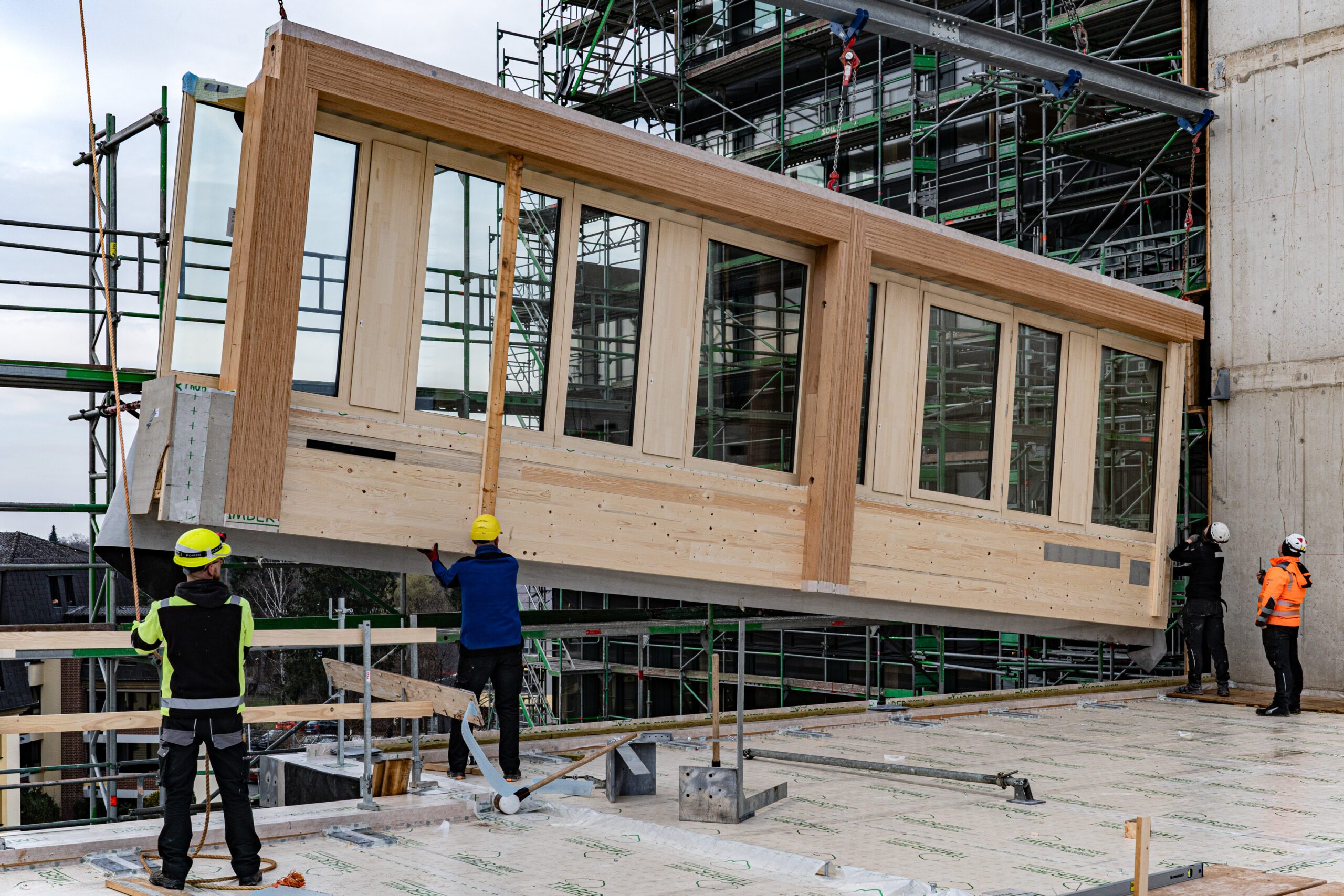
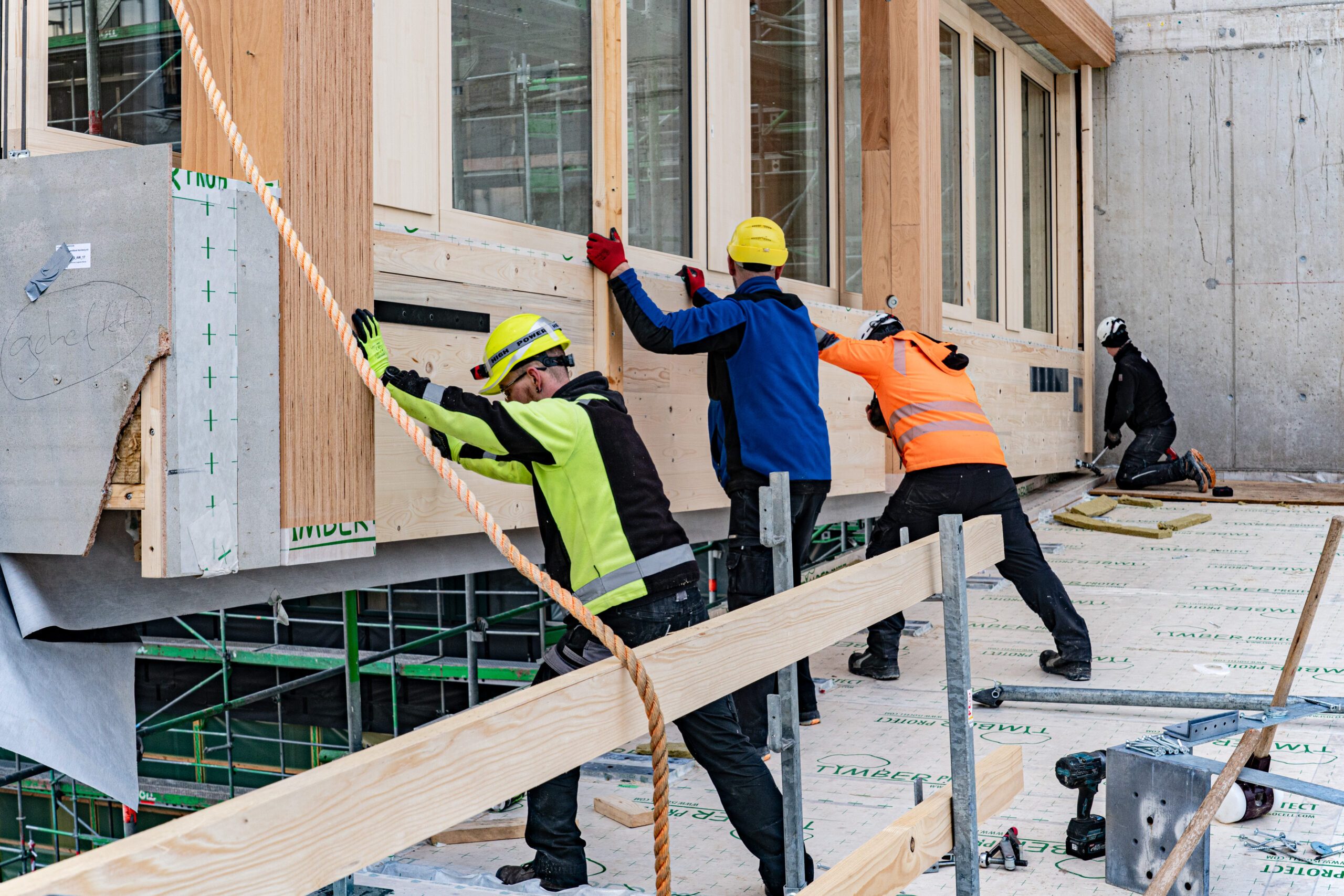
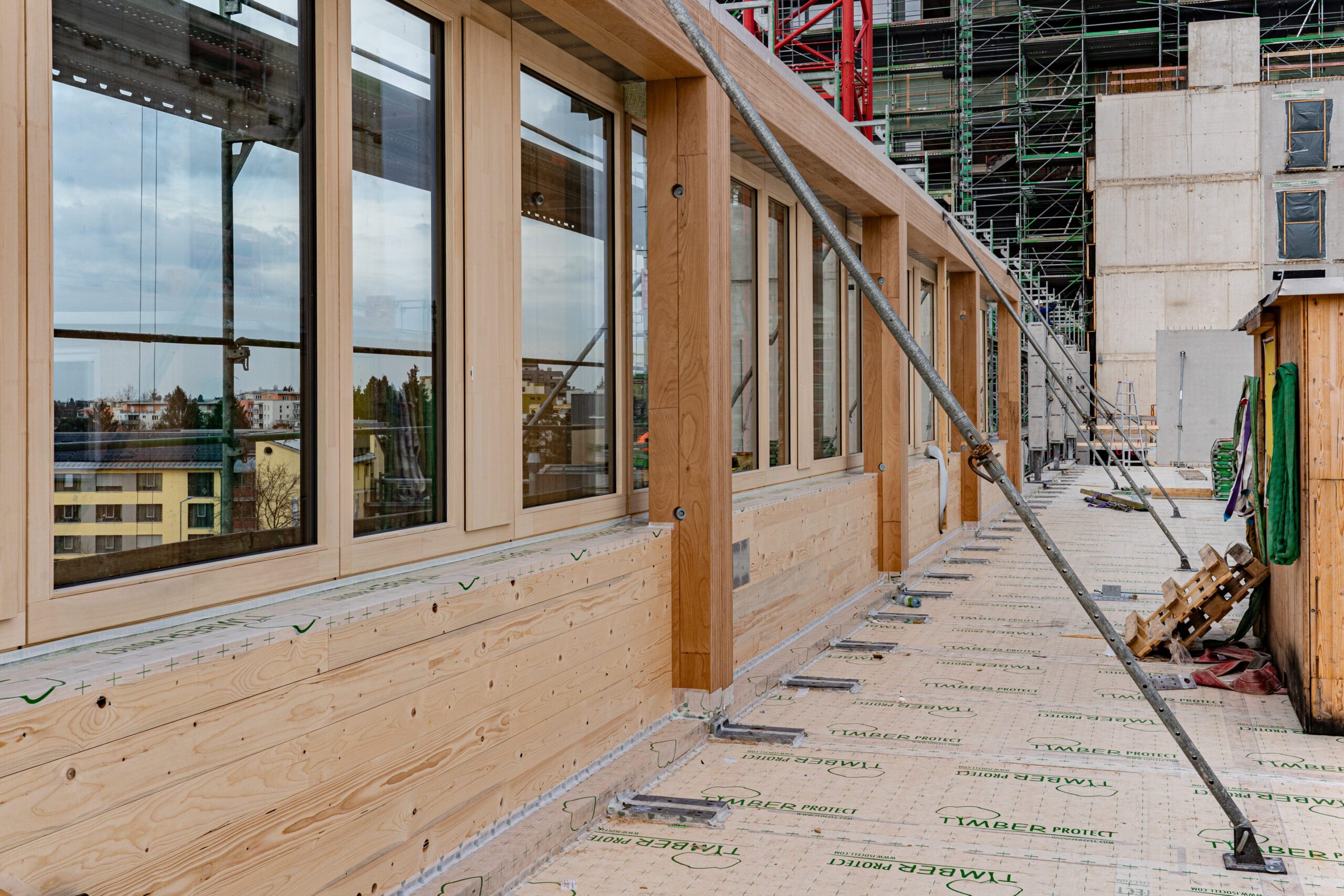
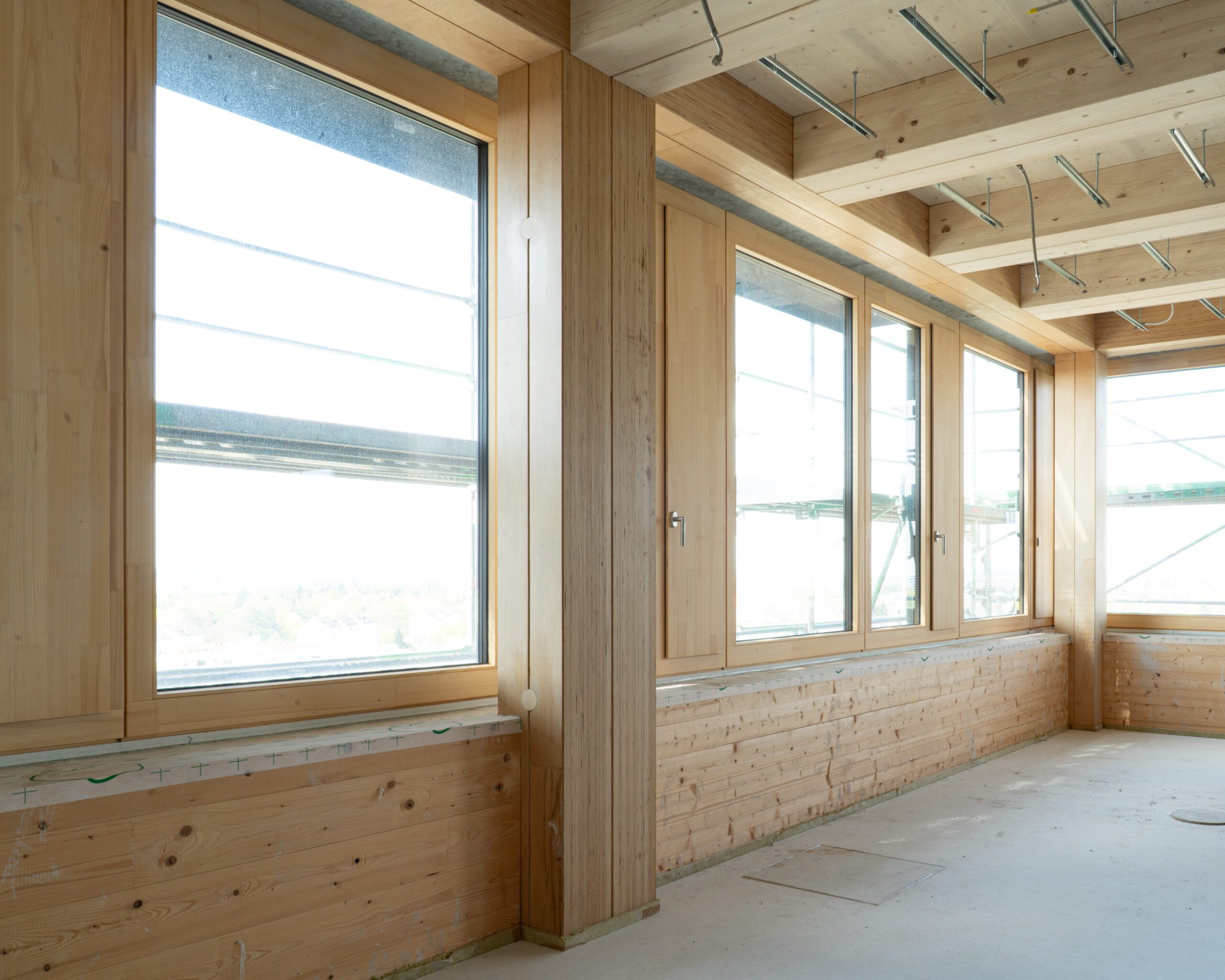
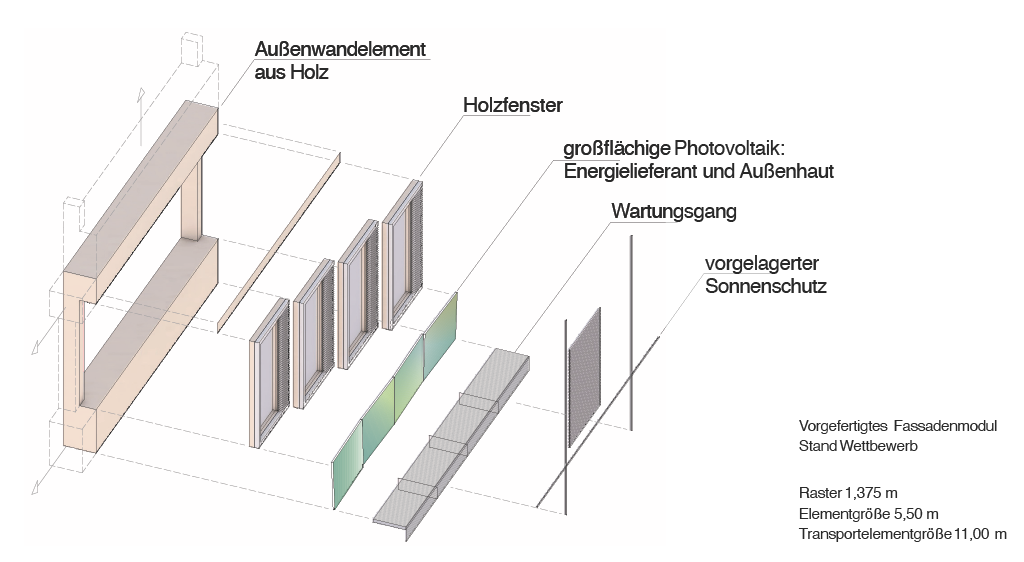
The timber construction work began in August 2023 and was due to be completed by the end of December 2023 – an extremely ambitious time schedule of only five months for a high-rise building of this scale. Completion on time was only possible thanks to extensive prefabrication at the Aichach plant of the timber construction company ZÜBLIN Timber. There, fully insulated timber panel elements were manufactured for the external walls – totalling over 6,000 m² – which then simply had to be installed on site. To facilitate transportation, 5.5 m long façade elements were screwed together on site to form the standard 11 m units. Windows and parapets were fitted at the factory so that the building frame and façade could be installed in a single step, further speeding up construction.
©Spengler Wiescholek Architektur Stadtplanung PartGmbB
Fire safety – keeping timber exposed thanks to a misting system
From a design point of view, the planers of the UmweltHaus wanted to make sure that the structural framework made of BauBuche and spruce was visible throughout the interior of the building – something that is by no means easy to achieve in a 52 m high-rise. „A celebration of a structural framework with a striking visibility of timber taking centre stage” is how architect Ingrid Spengler described the vision. In Bavaria, strict fire safety regulations apply to all buildings in class 5 (GK 5) with exposed timber. Consequently, the BauBuche and spruce components had to be designed so as to provide a fire resistance rating of 90 minutes (REI 90), taking into account the rate of combustion. When factoring in the non-load-bearing burn-off allowance, it becomes apparent that the chosen materials allow for extremely slender building elements. Critical joints were eventually fitted with milled infill panels, and exposed steel components were coated with fire-retardant paint. In addition, a highly efficient high-pressure water mist system (HPWM) was installed, which extinguishes fires using a minimal amount of water and therefore causes less secondary damage that a conventional sprinkler system. Also, there are fire alarms throughout the building, with a direct link to the Nuremberg fire Service.
From the very start, the project was supervised by both private and public fire safety experts, as the German model guidelines for high-rise timber buildings did not cover all aspects of the UmweltHaus construction. The bespoke fire safety solutions developed in this project will assist planners when seeking planning permission for other high-rise buildings made of timber.
Photovoltaic façade – weather protection and energy source in one
The building envelope is as innovative as the timber structure, as the entire façade is clad in photovoltaic modules. From the street, the building looks like a green-tinted glass structure. It is only at second glance that it becomes clear that the entire surface is actually generating electricity. For the designers, it was important that their project would not stand out as a technical showpiece or an overtly „green” building. According to the architects, this timber high-rise fitted with a full-surface, active photovoltaic façade is the first of its kind in Germany.
Great reception
The topping-out ceremony in February 2024 attracted widespread media attention. Mayor Marcus König described the UmweltHaus as a landmark project for Nuremberg, while State Secretary Rolf Bösinger remarked: „In terms of its size and the amount of timber used in its construction, this high-rise building is truly unique in Germany.” In June 2025, the project won the IHK Real Estate Prize for Middle Franconia in the innovation category. The award recognised the extensive use of regional building materials and the consistent circular economy approach.
Transferable solutions
The UmweltHaus demonstrates clearly that BauBuche is the ideal material for projects where standard layouts and conventional approaches reach their limits – for example because they would restrict building heights, lead to posts interfering with the use of interior spaces or would require excessively large connectors. BauBuche also is the perfect solution where loads and traverse compression stress are extremely high. Such demands arise typically where land prices are high, in the construction of flexible office, research, educational and industrial buildings and where proprietors seek to complete prestige projects of a sophisticated architectural design. In such developments, BauBuche often provides the perfect solution, especially if spruce glulam is not an option, be it from an economic or a design point of view.
Recommended link: https://tinyurl.com/2v8zu2ec
text by: Susanne Jacob-Freitag, Karlsruhe
Please note: The article is protected by copyright. For use or publication, please contact Pollmeier or the author.